

How Inner Liner Material (304 vs. 316 Stainless Steel) Affects Thermal Retention & Corrosion Resistance
When choosing a vacuum-insulated bottle, the inner liner material is a critical factor that directly impacts both thermal retention performance and long-term durability. As a professional stainless steel water bottle manufacturer (Senyhua, Zhejiang Senyihua Cups Co., Ltd.), we frequently help global brands and distributors understand the trade‑offs between two common grades: 304 stainless steel and 316 stainless steel.
Thermal Retention: Why Material Matters
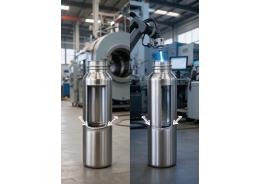
Both 304 and 316 are austenitic stainless steels with similar thermal conductivity (around 16–21 W/m·K). In a vacuum‑insulated structure, the inner liner’s material does not significantly alter the insulation performance because the vacuum layer itself is the primary barrier to heat transfer. However, the wall thickness and surface finish (which can be controlled during OEM manufacturing) play a bigger role. Senyhua’s advanced vacuum forming and laser welding processes ensure that regardless of whether you choose 304 or 316, the thermal retention remains at industry‑leading levels—hot drinks stay hot for 12+ hours and cold drinks stay cold for 24+ hours.
Corrosion Resistance: The Key Difference
The main distinction lies in corrosion resistance. 304 stainless steel (18/8) offers excellent resistance to rust and most food acids. It is the standard for daily use with water, coffee, tea, and juice. However, 316 stainless steel (also known as marine‑grade) adds molybdenum (2–3%), which provides superior resistance to chlorides, saltwater, and acidic environments. For users who regularly fill bottles with sports drinks, salty water, or acidic beverages (e.g., lemonade, tomato juice), 316 is the preferred choice to prevent pitting corrosion and prolong the liner’s lifespan.
Durability & Hygiene
Both grades are non‑reactive and safe for food contact. The electro‑polishing process (available in Senyhua’s production line) further smooths the inner surface, reducing bacterial adhesion and making cleaning easier. While 316 has slightly higher hardness, the practical difference in everyday drop resistance is negligible. What truly matters is the overall build quality—the thickness of the inner liner, the precision of the vacuum seal, and the robustness of the lid sealing system.
Senyhua’s Customization Approach
As a factory that offers OEM / ODM services and a customizable 3D model library (38 models available), we help clients select the optimal inner liner material based on target market and usage scenario. For general promotional drinkware, 304 is the cost‑effective standard. For premium outdoor hydration series or large‑capacity bottles intended for extreme environments, 316 is recommended. Contact us at [email protected] to discuss your specific requirements.
Conclusion
When comparing 304 vs. 316 stainless steel inner liners, there is no single “best” choice—it depends on your corrosion resistance needs and budget. Senyhua’s expertise in vacuum insulation technology and lid seal design ensures that whichever grade you choose, your product will deliver excellent thermal retention and long‑lasting performance. For more information, visit Senyhua.com.

 English
 German
 French
 Russian
 Spanish
 Japanese
 Korean
 Portuguese
 Ukrainian
 Arabic
 Italian


