

Standard Drop Test Procedures for Insulated Mugs: What You Need to Know
When sourcing insulated mugs from a manufacturer like Senyhua (Zhejiang Senyihua Cups.Co.,Ltd.), quality assurance is paramount. Drop testing ensures that your stainless steel tumblers can withstand everyday accidents without losing vacuum insulation or structural integrity. Here’s a breakdown of the standard drop test procedures used in the industry.
Why Drop Testing Matters
Insulated mugs are designed to keep beverages hot or cold for hours. A single drop can compromise the vacuum seal, dent the outer shell, or crack the lid. Rigorous drop testing helps manufacturers identify weak points and improve design durability. For brands partnering with Senyhua, these tests build trust in the product’s reliability.
Key Drop Test Parameters
Standard drop test procedures typically follow international standards such as ASTM D5276 or ISO 8318. The process includes:
- Drop Height: Most tests require drops from 1.2 meters (≈4 feet) onto a concrete floor, simulating a countertop or table fall. Some premium mugs are tested from 1.5 meters or higher.
- Drop Orientation: The mug is dropped in multiple orientations—bottom flat, side, top edge, and at a 45° angle—to replicate real-world scenarios.
- Surface Type: Standard concrete or steel plates are used. For more rigorous assessments, tile or carpet surfaces may be included.
- Number of Drops: Typically 6–10 drops per sample, with visual inspection and vacuum retention checks after each drop.
How Senyhua Ensures Quality
As a professional stainless steel water bottle and tumbler manufacturer, Senyhua integrates drop testing into its QC process. Each prototype batch undergoes the above procedures to meet OEM/ODM client specifications. “We test not only the insulation performance but also the structural resilience,” says the quality team. This commitment helps distinguish Senyhua as a reliable insulated bottle factory for global distributors.
What to Look for in a Drop Test Report
A credible report should include:
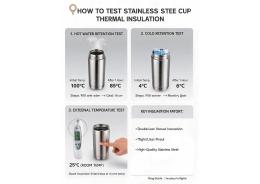
- Pre-test and post-test vacuum retention data.
- Photos or videos of the drop sequence.
- Pass/fail criteria (e.g., no more than 0.5°C temperature change per hour).
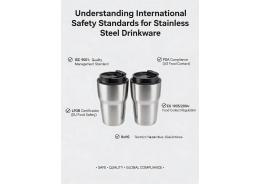
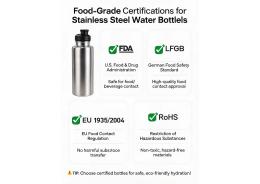
- Certification reference (e.g., ASTM, ISO).
By understanding these standard procedures, you can confidently specify drop test requirements for your next bulk order with Senyhua.
Contact Senyhua at [email protected] or call +86 15268687667 to discuss your custom insulated mug project.

 English
 German
 French
 Russian
 Spanish
 Japanese
 Korean
 Portuguese
 Ukrainian
 Arabic
 Italian


